The Untapped Potential of a Recomposable Workforce: Enhancing Agility and Innovation with Independent Talent
 42
MIN
42
MIN
At MBO Partners, inclusivity is at the core of everything we do. Our webinar offers both audio and text options, ensuring accessibility for all. If audio isn't suitable for you, you access the transcript below.
Description
On August 27th, we hosted a webinar with Audra Nichols, COO of MBO Partners, Miles Everson, CEO of MBO Partners, and Katy Tynan from Forrester. The discussion focused on how integrating independent, self-employed professionals into your talent strategy can enhance agility and innovation. Attendees learned about creating a recomposable workforce, the benefits of leveraging independent professionals, and effective management techniques for a diverse workforce.
The webinar highlighted insights from a Forrester Consulting study commissioned by MBO, showcasing how proactive workforce planning can address critical roles and market demands.
Thank you to everyone who joined us and engaged in the conversation.
Your presenters:

Miles Everson
Chief Executive Officer
MBO Partners

Audra Nichols
Chief Operating Officer
MBO Partners
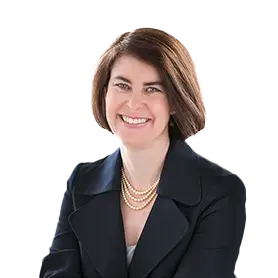
Katy Tynan
VP, Principal Analyst
Forrester
Transcript
[00:00:05.27] - Emily Stringer
Hello everyone, and welcome to today's webinar, The Untapped Potential of a Recomposable Workforce, Enhance an Agility and Innovation with Independent Talent, featuring MBO Partners' Chief Operating Officer, Audra Nichols, MBO Partners' Chief Executive Officer, Miles Everson, and Forrester's Vice President and Principal Analyst, Katie Tynan. We'll give everyone just a moment here to get settled in before we get started, and we'll move on to a couple of housekeeping items. Here at MBO Partners, we are contractor engagement and compliance specialists and are the chosen workforce optimization partners of over a third of the Fortune 100. Our mission is to make it easier for large enterprises and top independent talent to work together. We make it easy for independents to completely start, run, and grow their businesses using our unique dual-sided platform. Before we get started, I have a few housekeeping items and friendly reminders prior to today's presentation. First and foremost, please ensure that you are muted. Secondly, at the end of today's presentation, we will host a formal Q&A session. You can use the Q&A function to send us any questions you would like our panelists to answer. Additionally, we will be emailing a slide deck and a recorded copy of the entire webinar to all registrants within the next week.
[00:01:34.17] - Emily Stringer
Finally, you can follow MBO Partners virtually in several different places. Visit us on the web at www. Mbo Partners. Com/insights. Follow us on Instagram @MBO_partners, or follow the great realization or MBO Partners on LinkedIn. At this time, it's my pleasure to introduce you to our moderator, Audrey Nichols. Audrey joined MBO Partners in January of 2022 as our Chief Operating Officer. She's responsible for all talent and client-facing services for MBO's portfolio of independent contractors and enterprise clients, along with the operational excellence functions of the organization. Prior to joining MBO Partners, she served as executive vice president for UnitedLex and spent over 25 years at PwC and Arthur Anderson. Audrey, at this time, It's my pleasure to turn it over to you.
[00:02:32.27] - Audra Nichols
Thank you, Emily. Welcome, everyone. I hope everyone has their afternoon coffee. It is my pleasure to moderate today's webinar. First, I'm honored to introduce Miles Everson. For those of you who do not know, Miles is a visionary thought leader in the future of work. Our CEO at MBO Partners, and his entrepreneurial mindset is our lifeblood every single day. Katie Tynin also joins us. She is the Vice President and Principal Analyst at Forrester. Katie works at the intersection of people and technology. They both have impressive experiences, as you can see here on the slide. I won't go through it in detail. But what I think is most important is that they're practical, no-nonsense stewards of the future of work. Both of them celebrate varying points of view and perspectives, and that's what makes them so authentically good. Folks, the reason we're here is in the spring of this year, MBO Partners commissioned Forrester Consulting to explore how leaders address gaps between their current workforce and the one they need to achieve their goals, and how a strategic focus on talent sourcing can lead to operating model benefits. What Forrester did is they conducted a survey of 206 sourcing strategy decision makers, all those involved with contingent labor in their organizations.
[00:04:00.08] - Audra Nichols
Each organization that was surveyed has over 1,000 employees and with a minimum of 5% of the workforce classified as contingent labor. The results have been summarized in a forest or opportunity snapshot, which we're all very proud of. It's called the Untapped Potential of a Recomposable Workforce. It was published last month. We'll hit the highlights today. If you don't have it, we'll show you at the end how to get it. Of course, it's always out there on LinkedIn. All right, guys. I want to start with some of the basics. A definition. What is a recomposable workforce and why have we chosen that word? Miles, I'm going to start with you. You've been a thought leader in the future of work for many years, and you actually coined the phrase, the great realization, Recomposable at a time when others were focusing on the great resignation. The term recomposable is something the three of us have batted around when we were writing this paper. Miles, why don't you start? Talk a bit about what that means to us.
[00:04:58.25] - Miles Everson
Great. Thanks, Adria. I'm happy to be on the discussion today with Katie, and welcome, and thank you to everybody that's joining to hear our message today. The recomposable workforce, first is I'd like to start with what the business drivers are behind this. What we know is that there's just some fundamental things that are happening. The first is the rate of change is continuing to accelerate. That's almost irrefutable by any measure. The second thing that we know is that the most valuable assets are getting fractionalized. And this has been happening for decades, but it became front and center for most people in the '80s when we invented these things called mortgage-backed securities, and you could own a piece of somebody else's home. Obviously, now there's cars and homes and all kinds of things that are fractionalized. Why not think about your workforce as being fractionalized so you can assemble the parts to get the most value out of the assets that you're deploying? The idea of recomposable is that you can turn around and have a mix of your full-time employees and your extended workforce, that extended workforce comprising independent professionals, consultants, and other service providers that are not part of your full-time workforce.
[00:06:23.26] - Miles Everson
Because frankly, full-time workforce is largely a contractual model. And the game today is to be able to fit into your system the right skills at the right time at the right price, because we do have a human capital scarcity issue in terms of one of the overall trends that we're seeing, particularly in the independent knowledge worker space. And so with that human capital scarcity issue, you have to be able to assemble a team to execute a mission or project, a set of outcomes. When that's done, just assemble that team and reassemble another set of skills and capabilities to go after the next mission at hand.] So that's how I think about it. And as you've mentioned, I've been on this for more than a decade now in terms of what it looks like to have a flexible workforce, whatever you want to call it. But recomposable is really what we're talking about here.
[00:07:22.10] - Audra Nichols
Yeah. Awesome. Katie, I'm sure you have some comments on that. I've long considered you, followed you, the primary analyst in this space. Actually, one of my favorite pieces that you've done is the No More Jobs report. I think it's often misunderstood, and I love how you come up with these provocative names for what you publish. How do these two concepts relate? You wrote that and first published it maybe two and a half years ago. I guess I'm thinking as Miles talks about talent scarcity, which I think we'll get into in a bit, how did those two relate, No More Jobs and then Recomposable Workforce?
[00:07:59.22] - Katy Tynan
Yeah, it's great. And first of all, thanks for having me to hang out with you all. You know I love talking about these things. And the No More Jobs report, you're right, we like to pick provocative titles at Forrester. We like to ideally make people think. And so No more jobs was never about no more employees. It was about the fact that the construct of a job, that idea of a box that we put people in, was not helpful to organizations who were trying to become more dynamic, more agile. The idea is not no more employees. It's that the job description, that box, is not a good model. If we start there, what's a better model? That's where the idea of recomposable comes in. We use a lot of different words to talk about this. Agility is a word that a lot of organizations use, but I don't like to use agility because it gets confused and conflated with agile and agile development practices. When we went down that path, we were using the word adaptive or adaptable and how organizations can adapt to these new circumstances. But really, recomposable felt right when we were talking about the nature of trying to leverage a portfolio of humans with capabilities to execute, and Miles just said this, these business outcomes, and how do we try to compose and recompose and restructure with the talent that we have and with talent that we can borrow in order to get things done.
[00:09:43.09] - Katy Tynan
We describe it in the No More Jobs model as build, borrow, buy, bot. Buy is, of course, what you
think of as employees on the open market. Build is upskilling the talent that you have. Borrow is
leveraging talent that is not fundamentally your employees. And of course, bot is the automation
lever that what can we automate so that humans can focus on doing human things. That
collection of ways of thinking about getting work done is the way we see smart companies
approaching that challenge that Miles so rightly described, which is change is continuous,
workforce is constrained, and we still got to get stuff done every day and compete.
[00:10:30.02] - Audra Nichols
Is there anything different today than when you published it? Am I right? Was it about two years ago, two and a half years ago? Do you see, based on your hypothesis by which you created that, and then what we're going to go into a little bit more depth today, and I think the survey that we conducted actually has proven what we went into it, why we asked you to do this, is, all right, go objectively get some of this information, and let's see if it tells the story we think it's going to tell, which we'll take you through, folks, here in a bit. But is there anything different today than two and a half years ago.
[00:11:02.22] - Katy Tynan
Yeah, two and a half years ago, when I published that report, a whole bunch of people said I was crazy. And they said, Nobody's ready for this. We can't do this. And now, today, everyone's trying to do it. So that's the difference. It has only become more urgent. It has only become more important because, first of all, generative AI showed up on our doorstep and absolutely inflamed the bot lever of that four-part model. With more and more obvious demographic shifts that are making talent more constrained, as well as new and emerging skills, making it harder to have the skills you need in the moment that you need them, it has only become more urgent, and more people are now coming to us as Forrester and saying, How do I do this? What do I need to do this? Okay, we thought it was a nice idea two years ago, but it was a little ahead of its time. Now we can't operate unless we get better at this.
[00:12:02.25] - Audra Nichols
Yeah.
[00:12:02.29] - Miles Everson
I would just add that is looking at the lens from the enterprise or the company, which is obviously critically important. But equally important is that increasingly individuals are choosing to work as independents. It's the fastest growing cohort of the US workforce. So the balance of power between worker and company is shifted to the worker, and it's going to continue to shift more and more to the worker. And companies that don't realize that will do that at their peril.
[00:12:39.23] - Audra Nichols
Yeah. What was it, Miles, last year, our so I report, which will come out here in less than a month, I think, or maybe a month, but the 2023 version, it was 72.1 million independents.
[00:12:52.16] - Miles Everson
Correct. Yeah. That's what it was.
[00:12:55.04] - Audra Nichols
It's shocking. And it's up 89% since 2019. Or something. I think people thought COVID was a blip and that it was just you, right? And it actually changed expectations of having control over your professional life, which is really good. All right, I want to go into some data. I'm going to start with data that I actually think is going to paint, to your point, Katie, a little bit of the story of urgency. I want to look at our first slide. I've just got four data points on here, but I want to start our discussion with some of these interesting facts. First of all, on the left, PwC actually publishes a global CEO survey every year. This is from this year. It was published in January that nearly half or 45% of global CEOs are concerned that their companies will not be viable in 10 years or less. Add to that a finding in McKenzie's recent report on preparing workers to thrive in a skills-based economy, lots out there on finding that only 28% of global leaders indicate that their organizations make effective decisions on closing skill gaps. I think that effective decisions part is really, really important.
[00:14:14.14] - Audra Nichols
Additional data from these respected organizations cite that as many as 74% of CEOs view skill gaps as a threat. So 28% say, We don't know how to make good decisions about it. 74% say, It's a threat. And the ability to actually... A threat in terms of the ability to execute on a strategy, but only one-third are prepared to address related role disruptions to what you originally proposed two and a half years ago, Katie. That is a role disruption. What this tells me is that there is a burning platform and a lot of work still to be done. Maybe they thought you were crazy, maybe there's more urgency today. I'm still not sure when I look at this data, the data we got from our survey, all kinds of data out there that we're actually converting fast enough to solve our problems as an enterprise. Now, I want to add to that a few data points from our survey that further paint this picture. If we look at this next slide first, our survey found that 86% of decision-makers feel they are being proactive and optimizing their workforce. That's the combination of the 57 and 29.
[00:15:31.25] - Audra Nichols
It was a 10-point scale, and this is from 7 to 10 in terms of how the organizations describe their approach to workforce optimization. Eighty-six % feel they are being proactive, which contradicts what we've already heard at the very beginning of this, right? Now, that's good, okay? But more than half of them, or 53 %, don't really understand how a proactive workforce strategy would actually work. In the lower right, 89% of them say that there are more efficient ways to manage FTEs and the contingent labor they use today. So they're using it, but they're still not sure they're doing it right. The problem statement here is this. There's a substantial gap in moving from strategy and intention, from being proactive to actual execution. How do I to to realize those results? Katie, you work with organizations on this topic all the time. Which business functions, in what you're seeing, which business functions in an organization need to change to close this gap in implementation? How do they do that?
[00:16:49.00] - Katy Tynan
It's a great question. I would just start by saying the reason that gap exists is because we have tended to think about these things in silos. Organizations tend to live with their habits long past the time that those habits serve them. The silos we see are that HR is responsible for employees. Employees are a very particular category of talent. Hr wants to manage and have systems and solutions and practices for managing that talent. Then often, the non-employees are managed by or thought by procurement or finance. That's where a lot of that management space lives. Then if you take it a step further and add in that bot lever that I was talking about before, that automation lever, in a lot of cases, that's IT. We have different groups who are trying to figure out how to leverage these different pieces and parts, and they're not always talking to each other, or if they are talking to each other, they may actually be in competition. When you see that 86% number, we're being proactive. But in what way are you being proactive? Are you being proactive because you're thinking about workforce planning in your silo?
[00:18:14.06] - Katy Tynan
Because if that's the case, that's not really proactive or helpful. Whereas if what you're doing is starting to work cross-functionally and starting to build those bridges and think of total workforce, then you probably are really doing it proactively. But just thinking about it does not translate into action. To me, the groups that need to make the biggest changes are HR, procurement, and IT. They need to get together. To be very honest, and some of you may also work collaboratively with those. I spent the first half of my career in tech and the second half of my career in HR, and so I am well positioned to tell you that tech and HR are not friends. That's a problem. We will not not get over this hurdle of figuring out how to do this better until we learn internally how to work together better, how to share, how to make sure that we are driving towards the same goals and outcomes, and stop making internal competition a barrier to that process. To me, those are the big three that need to work differently and work better together to make this happen.
[00:19:24.07] - Audra Nichols
We just had a question come in. For those of you who want to just a minute, any questions for the Q I'll try to ask them as they go as I look at them. And if not, we can certainly have time at the end. But can you be a little bit more prescriptive? The question is, how does HR then need to evolve to support that strategy? So that's an intention. That's a strategy. But be practical. If I'm a chief people officer, what do I do tomorrow that I'm not doing today?
[00:19:51.20] - Katy Tynan
The first thing I would tell you is you need to open the aperture in terms of your data and analytics. So a lot of HR folks are only looking at data related to employees. The first thing you need to do is look at your total workforce, and that may be hard to do. It may be that they're managing different systems. It may be that there's a lot of fragmentation across your organization about how this works, not to get too far into the weeds, but sometimes you're managing even that non-employee chunk in four or five different ways. Sometimes different parts of the business have direct connections and communication with the folks that they bring in. Other times it's going through a centralized procurement process. Other times people are putting down credit cards on big platforms and buying stuff that way. That all represents work being done in your organization, which means that is the workforce. So HR needs to open the aperture of where do they get their data, how do they think about work, what do they define as work? So that's the HR side of that picture. Then once you have the data, the next thing you need to do is start communicating very regularly with these other parts of the organization.
[00:21:10.23] - Katy Tynan
So not once a year we sit down and have a pretend nice conversation and say nice things to each other. But every week, every month, let's look at these numbers together. Let's look at these problems together. Let's work together and understand each other's language. I think that's the last piece I would talk about is there is a There's a language barrier sometimes. We use our own words in HR about how we think about and talk about talent. Procurement uses their own words. It uses their own words. We need to come together and have common language about what we're talking about when we say A, get things done. Roles, skills, upskilling, development, all of this, we need to be on the same page in how we're approaching it. Those are the big tactical changes that I would go after.
[00:21:58.29] - Audra Nichols
Miles, I'm going to ask you to add to that, but I want to frame it a little bit because she raised a few things. Katie can talk all day long in terms of those different functions. You established this workforce mix approach, the urgency for a recomposable workforce at PwC. Now you run a business where we at MBO Partners help large enterprises do just that. Because that's the gap. The gap is, I know, I understand there's lots of things that I can do, but I don't even know how to get started and what if I do it wrong? If I start bringing in or first recognizing and identifying, because here's the reality, everybody's got a contingent workforce, whether they acknowledge it or not. Some of it's subversive. People are using their credit cards, they got their own staff. There's all kinds of things going on. You work with our large enterprises to bring MBO to the table. Just talk a little bit about those two lenses.
[00:22:58.01] - Miles Everson
I'm going to come at it from two levels. I agree with what Katie was saying in terms of how HR should look at it, et cetera. But my view on this is you have to start with a simple question to your CEO if you got access to her or him. And that question is, do you believe that the people here are your most valuable asset? Over 95 % of CEOs will say yes. Okay, then can we agree that the people that we rely on include this extended workforce that we're referring to? Because if they say it's only my full-time workers, they're naive. Because to your point, every company is using a number of alternative workforce people to drive their strategy. It's not just filling open recs that can't be filled with full-time. Many of them are in value creating roles. Then if I'm sitting in HR, my question is, who then, CEO, do you look to to make sure that you have the right composition of workforce? Because right now in many companies, it's at least bifurcated, if not more fragmented. You need to change the mandate that the HR function, or in some cases, I would say the chief operating officer needs to have, because it's an operating model issue as much as it is an HR issue.
[00:24:28.13] - Miles Everson
If you can get If that nut cracked, which I'm not suggesting is easy, then you can make a lot of progress on this, because there is also this little thing out there that says 80% of all projects or transformation initiatives fail unless it's a priority of the CEO. Right. And their project succeeds.
[00:24:49.27] - Audra Nichols
That's the hard part, right, Miles? I mean, so you started with, go talk to your CEO. How many HR leaders who are responsible for that workforce, even if they're doing it right, how many do you think actually have that conversation? And then how do you get the C-suite interested in that?
[00:25:10.26] - Miles Everson
So here's how I think about it. One is I think many, many do have access and a right to have that discussion. However, increasingly, the human capital scarcity issue is a sufficiently significant issue that it is in the C-suite and it is with the board. If they're only talking about full-time employees, they're missing the point. That's the message that HR can get through. By the way, many of them are. I'm not here ripping on HR functions, but it's the significance of the issue. Because when you had plenty of employees and workers, it didn't really matter. You had other things to worry about when you're the CEO. You're focusing on customers and supply chain and all kinds of other stuff. But today, the human capital is so critical. It's more than just, I should upskill my existing workforce. There's all kinds of companies that have dumped billions end up upskilling their workforce that have failed. Those initiatives can work in some cases, but in most cases, they've struggled. And so my point is, let's talk about where we're going to source our talent in a most open lens or open aperture, as Katie said, and then start to talk about the mandate.
[00:26:32.11] - Miles Everson
And once you get the mandate addressed, then you have a shot at being able to truly compose a recomposable workforce. And we'll probably get to this later. I don't know. But it's not just having the existence of people. You got to put it into the DNA of how you operate the company. That's why I'm saying you got to have a CEO and COO that's at the table saying, We are going to operate differently than the way we have in the past if we want to be able to get the benefits of a workforce that is the most comprehensive workforce we can have.
[00:27:08.09] - Audra Nichols
And you get what you measure. I mean, that's my belief as an operations leader is you get what you measure, right? I mean, what I've done is I've actually measured the number of billable hours coming from my independent contractors. We had a mix. There's a reason for it. It's beyond just the human capital scarcity issue. It gets down to speed to market and your total margin, right? Your carrying costs, the allocation of your capital. We had another question come in. I'm going to address this one to you, Miles. So it says, do you think it is plausible that experienced leaders, sometimes referred to as old school, can shift gears to actually adopt these new ways? It seems that a massive inflection point must take place.
[00:27:51.12] - Miles Everson
So the short answer is there's many that will and there's many that won't. I have found that the best way to move the needle on this is around the discussion using metaphors of assets being fractionalized. And with the effects of innovation on how you operate. So smartphones came out roughly 15 years ago. Most of those older leaders were obviously around before smartphones came out. They couldn't imagine how they're going to run their day right now without a smartphone. They can all relate to mortgage-backed securities. They can all relate to the ride share apps. They can all relate to the Airbnbs and the VRBOs of the world, and it's fractionalized. You got to ask a very simple question, why do you think your most valuable asset should not be fractionalized when every other asset that people use has been fractionalized in all both rise in a liquid market of fractionalized assets? You got to put it back on them. Instead of defending the position as why you should move to this. You got to use the metaphors to say, why do you think we're immune to this change in fractionalization of assets? Because nobody is.
[00:29:10.25] - Audra Nichols
Right. Okay. I want to drill down to the next level. I'm going to look at... There is some good news, so I want to move on to that. I want to break it down a bit. There is an increased understanding that the ability to augment the workforce hinges on a shift in how a workforce is defined, which we've started to touch If you look at the data that we have here out of the survey, those thinking the most proactively about workforce optimization are more than three times likely to think of their workforce as people with sets of skills versus a collection of job, job-recks roles, job descriptions, et cetera. This comes with an increasing realization that contingent labor helps increase workforce flexibility, meet temporary workload demand and can provide skills that are obviously in short supply. You talk a lot about innovation models. Katie, I want to go to, we've touched on a little bit, but I want to go to the talent scarcity bit. I think this goes back to your no more jobs report. But What we've learned is that the number one way organizations are addressing this is through the increased use of contingent labor.
[00:30:23.05] - Audra Nichols
In fact, 81% of leaders indicate that they have plans to use a set percentage percentage of contingent labor two years from now. That was one of our survey questions. Expecting this category of worker to make up more than one-third of their workforce in that time period. So the survey came out and said it's 35%. Interestingly, our SOI report of this past year showed that expectation to be 33%, and SIA report showed 30% last year. So this is all in the same area, and this is more recent than those. So let's say within a 12-month period, and it's a little bit higher. So what are you seeing in your research and with your clients? And can you extrapolate that data to the reality when it comes to action? Because again, we're still talking about intention. I hope to, I wish to, I dream to, I want to, I'm trying to. Then Miles, I want us to talk about how we help our clients do that after that. But what do you see with your clients and in that data?
[00:31:26.23] - Katy Tynan
Yeah, there's a couple of things. Let me just start by by tacking on to what Miles was just saying about the relative maturity of executives and their thought process around this. I do think most CHROs, most chief people officers, are sitting side by side with their CEOs right now, today, every day trying to crack this nut. On this one. However, yeah, but the part of the issue is, CHROs have come up through the ranks of compliance, and a lot of their Their focus is around their clear understanding of how to do compliance when we're talking about employees, which is not to say they don't know how compliance works with non-employees, it's to say it has not typically been their core responsibility. That was somebody else's problem. So this is a muscle that they are now flexing. So part one is you've got CHROs, again, who have habits, long-standing habits of how they are successful, and now they need to change those habits. And that means doing some things that make them uncomfortable. I know we're going to talk about this, but I think one of the things that helps get them over that hump is partnerships with people who are deeply experienced with those compliance issues who can help build that comfort level.
[00:32:45.15] - Katy Tynan
The second thing is related to the data and that 30% number, 30% and a third is a really, really, really important number. The reason it's important is because it is often a tipping point of things become sustainable in a business environment. I'll use diversity and diversity metrics as the same thing. When we look at gender diversity on boards and gender diversity in leadership environments, what we see is once you get to a third where you have a third women on your board or a third women in your leadership team, it becomes sustainable. Until that point, you often fall back. I'm looking at that 30% number and saying, I will bet you that that is a very similar tipping point for contingent labor. Once a third of your workforce is contingent labor, this isn't a side order of what you're doing. It is a significant percentage with scalable strategies and structures that support that. Now, it still requires, and you mentioned it before, it still requires operational changes in how you do business. Leaders need to lead differently. Operational practices and processes need to change in order to support that. But to me, that 30% number is a really significant place where we go from, we're mostly this, and sometimes we do this other thing, to, no, we do both of these things on the regular, and we know how to do that, and now we need to optimize it in order to get to the point where we do it really, really well.
[00:34:26.01] - Katy Tynan
So that's what I see in that 30 % number, that a number. That's why I think it's so important.
[00:34:32.23] - Miles Everson
So there's some other data. Katie, I haven't heard you talk about that before, but in the consumer markets, you're considered to achieve mass adoption of your product when at least 25 % of the market is consuming it. So 25, 30, it's the same zip code. So I would agree with your assertion there that it's sustainable and it'll continue to grow, maybe not as fast as it did. I don't know. It could be faster, but it's not going away.
[00:34:59.14] - Audra Nichols
Miles, the When the question came in, so what do I need to do to get started? What do we need to do to get started working with contractors or independent labor?
[00:35:09.03] - Miles Everson
Yeah. So I'll start with the way that we talk to our customers and prospects about it is there's three components, and you can start in any one of the three. But candidly, I'll talk about it in a way that's the natural progression, which is there's the three, or you have to engage, scale, and then optimize the use of your independence. And engage is you need to do it compliant. Because in order to scale, you need to be compliant, because if you're not compliant, you're going to get in trouble. That's with I would say, I'm going to add to that, Miles, people who have contingent labor in their organizations today, which we know most everybody does, there is a high likelihood many of them are not compliant because Bob hired his friend and is sending him a 1099. Right. And so you do the engage. And in engage, the first thing you do is say, We want to make sure that we're complying. This is what MBO does. It helps companies comply. And then also in that phase is you're discovering what is the actual population of independents that may be working here. So again, we help companies do that with discovering where are all the potential pockets of independent contractors in the company and are they being properly classified, et cetera.
[00:36:36.27] - Miles Everson
Then when you start to scale the use of independents, you only do that after you know that you know how to do it in a compliant manner. But you scale it, you start to drive productivity and cost savings out of the system. Then once you're scaling, then you start to say, But should I optimize my total workforce? What share of my workforce in different cohorts, revenue producers, value creators versus people that are infrastructure, value preservation teams, however the company talks about it, what mix do I want between full-time and alternative? You can do that with the use of What I'm talking about, which is processes, et cetera, but then technology, which is what we bring behind it to make it more efficient. The old adage for years has been, you can get two or three things. You can get faster, better, cheaper, but you can't get all three. That's changed. We can give you all three, faster, better, cheaper for human capital. That's why you should go after it. I laid out the building blocks to how you get started. Know where you are and then go from there.
[00:37:46.18] - Audra Nichols
Katie, I don't have a slide on this, but as he was talking, I was referring to some of the stuff that we had in our data points. Can you talk a little bit about the pain points? The biggest pain points that we found that you see it every day, but it did come out of our survey with managing the workforce today. Because I think part of what Miles is talking about, Engage, Scale, and optimize, We take people on a journey to address those pain points. But can you pull them out of your head? I didn't put a slide in here, but I think it's relevant right now.
[00:38:25.11] - Katy Tynan
Yeah, no, I think it's relevant, and I think it's important to talk about that There are a couple of things that we typically see. One of them is just the way cost works in HR and with FTEs and the way costs are aligned, and especially what that means in terms of, again, habits. I'm going to keep using the word habit over and over again because the way workforce planning works in most organizations is we have a budget and we have FTEs and we understand how those costs align and then finance gets together with HR and they say, You can have this many recs, or, No, we're trying to cut costs or we're going to do it this way. That is a business routine, and it happens on a very regular cadence. When you bring in something, and I'm going to use the word new, even though it's not new anymore, and we're at this 30% threshold, so we shouldn't be looking at this like this is some wild this new idea. But if contingent workforce planning isn't part of that regular dialog and conversation, then again, it's always going to be thought of as the interloper.
[00:39:44.23] - Katy Tynan
That is certainly one constraint and one challenge that we see. It's just the way that we think about FTEs, the way we budget, the way we do those habits. The second is, again, this whole idea of how we structure roles and jobs, how we think about skills, how we do all of that work. The way that a lot of this is done would horrify people if they really understood it, because it's spreadsheets upon spreadsheets upon spreadsheets. We've got competency models and mappings that you could put up in piles and like, wallpaper your house with them.
[00:40:20.13] - Audra Nichols
I did a competency model in 1998. I love it. Yeah, I remember that.
[00:40:27.16] - Katy Tynan
And shockingly, that same competency model, it reminds me of It reminds me when I used to do disaster recovery planning, when I was in IT and I would do disaster recovery planning. I would go into an organization and we would sit down and we would do all this work and we would come out with this binder that was their business continuity plan and it would sit on a shelf. Then something would happen and people would take up, blow the dust off it and look at it. That is also how competency mapping used to work. That is not recomposable, agile, adaptable. That is not a methodology that is going to allow us to move as quickly as we need to move. That is one of the challenges is you've got a lot of rigidity in these structures of how we think about talent, how we think about talent planning, how we think about budgeting, and we need to break some of those things down. But again, it sits in tension with that compliance thing. Because when we say we're going to break all this stuff apart, there are a bunch of people who hear risk, and they're not wrong.
[00:41:32.27] - Katy Tynan
We have to break it apart. We have to do it, but we also have to do it thoughtfully and with the right guidance and in ways that help us do what we're trying to do better instead of in ways that get us in trouble. Because any mistake suddenly becomes a reason why we can't do this. We tried that five years ago and we broke Rule X. We're never doing that again. And that's going to hold your organization back. That fear of trying, that fear of consequences. You've got to find ways to mitigate those risks so that you can then gain the advantages.
[00:42:10.16] - Audra Nichols
Exactly. Miles, you touched on that a bit. Now I want to get laser-focused on the independent professional. So contingent workforce is non-FTEs, and they fall into different categories, which to the point each of you have made is you really need to engage a partner to make sure that you've got them categorized correctly. You're paying them the right way based on the work they're doing. But Miles, before we go any deeper into the survey data, I want you to share a bit about your perspective because you've just written a book that comes out, I think early next year. You've just written a book about this called Free Birds Revolution, and it's really focused on the independent. At MBO, we call that the independent knowledge worker. I don't know if that's how you reference it in your book. And this is really where focus. So talk a bit about the realities of the market, your intention for the Free Birds Revolution, which gets specific into the independent. I know you're passionate about the social contract and how we move organizations from knowing their burning platform to then executing on it.
[00:43:20.00] - Miles Everson
Yeah. So maybe I'll start with the social contract, just very touching on it very lightly. But the social contract for workers and companies in this country It was built for a post-World War II structures. So what's changed? Well, a lot has changed in the social contract. So for example, you come and work at this company and we will take care of you for life. Those days are over, right? You've heard me say this, Audra, but in 1980, if you worked for a private company in the United States, two-thirds of you would have had a defined benefit plan or more than more. Today, that number less than 10%. Other statistics say it's less than four. So you can look at it however you want, but basically, corporate America broke the promise. It says, You come and work here and I'll take care of you forever. I would submit that that was a flawed strategy to begin with because it was not economically viable. You have somebody worked for you for 25 or 30 years and then pay them for an incremental number another 25 or 30 years. It just mathematically doesn't make sense. But having said that, that's a big change.
[00:44:30.06] - Miles Everson
That's a social contract that's broken. The other thing is, is while the social contract and regulatory bodies in this country give you the right to organize, they do not give you the right, in fact, they've stripped your right to determine how you engage with a company to provide the livelihood for your family. That's ludicrous. They're not protecting anybody. What they're doing is centralizing tax collection and taking control over the worker under these labor laws, and it's time for them to change. This country was built by entrepreneurs and innovators. Post-world War II, we corporatized it and scaled big corporations, and we stuck the creators of value in the bath, and they're not getting paid. You need to look no further than Taylor Swift. I'm not a big Taylor Swift fan, but I am when it comes to what she did when she wasn't getting paid for her music rights. Okay? That happens every day where the individual is not getting their fair share. And this is why people are choosing to go to be independents, frankly. And so when I think of an independent, a great independent owns their own narrative as to who they are.
[00:45:47.10] - Miles Everson
They're extremely authentic. They value freedom and independence. They're willing to be vulnerable and take risk. We're in a world right now where very few people trust central authorities. So you could say, who trusts big banks? Who trusts big tech? Who trusts big pharma? Who trusts big government? Most people don't trust big anything. I would be willing to bet that most people listening to this today will go look at Yelp for a food review before they would go to a food critic, because a food critic is a central authority on food. But what you want, and people increasingly are seeing, is they value the views and opinions of the masses more than they do central authorities. And so that's finding its way into the workforce with independence as well. So you're bringing an outside incremental view. And so if you are an independent and you do not invest in yourself to continually learn and be curious and have a point of view, be authentic about it, you will not be as successful as those that know how to do lifelong learning and apply those skills. And So in the book, I go through a series of chapters on what you need to do to be a successful independent, and what does a company need to embrace in order to take advantage of those people which are increasingly comprising a larger share of the US workforce.
[00:47:16.19] - Audra Nichols
When's it come out?
[00:47:18.12] - Miles Everson
January 28th.
[00:47:19.22] - Audra Nichols
Do I have to buy my own? And Katie, are you going to send us the-Okay, Katie, I want to go back to the survey because I think it drills down a little bit further. So The survey results provided a view of leaders' priorities for increasing this workforce, recomposable workforce, the agility, and the benefits that they're getting from the specific independent labor. I'm talking about the independents now. Talk a little bit about this relationship and what use cases you're seeing that will give hope to others that says, Hey, to Miles' point, Hey, this is doable. And all contingent workers indeed are not the same.
[00:48:00.02] - Katy Tynan
Well, and this is the tricky part, which is independent, especially when we're talking about independent workers, we're talking about a category of the contingent workforce that is typically high skill, high talent, high demand. These are the people that you bring in because you need the expert in X, Y, Z. This category of folks, first of all, they have There's lots of choices. To Miles' point, these are folks typically who are choosing what they want to work on when they want to work, which means that as an organization, when you are bringing these folks in, you need leaders who understand how to manage these folks in the context of their teams and the other things they're trying to do. If you look over on that left-hand side, the strategy is focused on integrating independent labor into long-term talent plans. The first thing on that list is improving our ability to manage independent workers. What does that mean? Well, we have data, and I'm very sorry to say the numbers have gotten worse. In 2021, we surveyed a bunch of HR decision-makers. One of the questions I asked was, how much do you spend, roughly, per leader per year on leadership development?
[00:49:23.15] - Katy Tynan
We gave them some buckets. Sixty-five % of organizations spend less than $2,500 per year per leader on leadership development. You may be saying to me, Well, Katie, $2,500 is money, right? That's an investment. Well, let's just imagine for a minute that you have a team of five people, and each of those people makes $100,000. That's a half a million dollar investment that you're protecting with $2,500 or less. Do you think that's the right amount? It's probably not. That was 2021. We just read in that survey, we just How about the data back? 70% of companies are now spending $2,500 or less on leadership development. We are not investing enough in our leaders, and yet leadership has become more complicated. We're asking leaders to manage hybrid teams that are made up of employees plus contingent labor, independent talent, plus bots, plus all of these other changes. We have a crisis right now, and that main crisis is in leadership capabilities and skills. And therefore, I am not surprised at all to see that number so high, that 78% improving our ability to manage. This is something organizations need to address sooner versus later. How are we helping our managers at all levels of the organization understand how to manage these hybrid recomposable teams?
[00:50:54.21] - Katy Tynan
How do we build leadership skills to suit the recomposable talent market marketplace that we are trying to promote and leverage? And that is a space that I just don't think there's enough attention being paid to right now. Frankly, it's a big barrier in the adoption of this as a common practice.
[00:51:12.23] - Audra Nichols
Yeah, Miles, do you want to comment on the next two, improving our ability to find independent workers, 76 %. And you've mentioned this briefly, improving our knowledge or expertise on how to legally classify independent workers. Two things that we do all day long with our clients. You want to talk about anything about those two findings?
[00:51:32.29] - Miles Everson
Well, the illegal classify, I'm going to set to the side. We do that all day long for our clients. That's our middle of the fairway metaphor here for us. But also increasing the ability to find independent workers. What I've seen work best for our clients, and then when I was in the chair of running a very large independent workforce, is Especially in the higher-end independence, there is high correlation between the knownness of the talent, the independent talent to the full-time workers, and their related comfort level of using independence. So if your program today is merely saying, well, here's the type of skills I need. You can just throw people over the wall to me and I'll pick the best resume. You're probably not getting the traction you should. So what we did at MBO is we make it possible for companies to build private talent pools of people. And you start to manage and nurture the relationship with those people, just like you do your customers in your CRM system. You have to get to know them. They know you. One project person or whoever, HR demand resource person, can see that that person has worked in the company three or four times before.
[00:52:55.12] - Miles Everson
And you create this knowingness because the best high-end independents, they work for six, seven clients rotating different projects, but they become to really know you. And this knowing this factor is so critical because in the United States today, if you're under 45, you change companies every four years. Those are my numbers. Those are the US Census Bureau. And if you're under 35, you change every 3.1 years. So if you take those demographic, and it goes back to the question that came earlier, how do you get the old guard to understand the difference. If you take those demographics, who actually believes that they're managing a permanent workforce today, even in their full-time employees? It's because, and I say that because the turnover is very high. They change companies every four, even if you take the high number, every four years, they're going to change companies. You don't have a permanent workforce, which you can have an independent that might work for you for two decades for six months a year. That happens. A lot. We see it. So that's how I would think about that, your ability to find independent workers is to find independent workers that you actually know.
[00:54:09.06] - Audra Nichols
Yeah. I can say right now in my history where I've had a lot of independents work with me on big engagements, both internal and for clients. I know the top three by name and still text with them multiple times a year. If I went anywhere, they are three people I would bring on to do a project for a client Okay, I can't believe it's 154 already. I've ignored the questions that have come in. I just want to pop to the last slide and just give you guys each an opportunity to comment on it. This is related to the overall benefits. It's very simple. It's basically competitive cost, speed, and innovation. I want to make sure, if you're a chief operating officer, if you truly have a defined mix, an understanding of how you bring together FTEs, independence, use of your offshore centers, et cetera, what that does to your operating costs and your total profitability, whether it be by, let's just call it client engagement or holistic Basically, as an organization, you have a much more predictable, manageable set of levers to pull if it hits the fan that makes you more competitive than your competitors out there.
[00:55:28.26] - Audra Nichols
So cost, speed, and innovation. Knowing we have just a few minutes, these are up here that it identifies the ones to the right. Anything jump out at you, I'll give you an opportunity to give some closing comments just based on summarizing what we've talked about today. And then I do want to get to one or two of, I think I've got four questions left and we can probably get to two.
[00:55:50.29] - Miles Everson
Well, I'm happy to go first. I'll just take the top one, which is 81% improved competitive differentiation. So one is, I think of competitive differentiation with your customer base. And the more outside in perspectives you can bring to how you're serving your customers, I think the better. It's not exclusive, but there's a good thing called groupthink, and if it's all invented inside, you may not be exploring all the opportunities. The other is competitive differentiation that results in value, market value capitalization. Our research that I've had done by buy-side firms is that those companies that have a higher relative share of independence to full-time in their workforce command as high as a 1,400 basis point premium on their market capitalization. I'm not suggesting that that's a causal thing. I do believe it's correlation in companies that run asset-like businesses and using more independence that you can move and have a recomposable workforce is an asset-like model. And so I do think there's quantifiable benefits.
[00:57:03.03] - Katy Tynan
Yeah. I just want to draw a lot of attention to what the question was. The question was benefits from optimizing your workforce. And I think this is the take home message is, I can't in one company look at my next door neighbor and say, I'll just adopt your workforce strategy. It does not work that way. This is about optimizing your workforce mix for what you do, which is specific to your company, your work, your market, your talent pool, your competitors, your products, all the things. When people show up on my doorstep and they say, Katie, what's the number? What's the % I should have? I can't answer that question. No one can answer that question for you. What you need to do is understand what are you trying to do and what does your workforce mix need to look like to do that in an optimal way. To be honest, it's not going to be a It's a done and done process anyway. You're going to have to adjust and adapt year over year, sometimes quarter over quarter, in order to make sure that you're always just riding that right part of the curve to get the outcomes that you're looking for.
[00:58:15.10] - Katy Tynan
You're probably going to do it wrong some percentage of the time. Optimizing is about testing and learning and trying and getting to the point where you have things the way you want and need them to be. There's no one right answer. It's a continuous process and practice, but it's worth it. It's obviously worth it if you look at these numbers on the right-hand side.
[00:58:38.08] - Audra Nichols
Awesome. Katie Miles, thanks for spending this hour with me. Everyone on the call to learn more about how a recomposable workforce can benefit your organization. Scan this QR code on the screen to download a copy of our report. We'll also be sending out a recorded version of this, as Emily mentioned, to all attendees. We are here to help. As you can see, the three of us are quite passionate about this topic. We've got more data than you can shake a stick at. I didn't get to all your questions. Some were hard. We'd be here for another three hours. It's great stuff. You're welcome to call Miles or myself at any time. You know how to reach us. You can get to us on LinkedIn, and we'd love to partner with you. Thanks so much.
Topics covered
00:05 Introduction of the webinar and speakers.
04:00 Recomposable workforce concept explained.
07:22 No More Jobs report and its link to recomposable workforce.
10:30 Workforce strategy changes.
19:35 Evolving HR roles and practical steps for CPOs.
23:03 CEOs’ view on the workforce as a valuable asset.
30:23 Increased reliance on contingent labor.
32:51 30% contingent labor as a sustainability tipping point
34:32 Mass adoption threshold at 25-30% market consumption.
37:46 Major pain points in workforce management.
42:10 Changing social contract and rise of independent professionals.
Subscribe to the Insights blog to get weekly insights on the next way of working
Learn more about MBO

Are you independent talent?
Learn how to start, run and grow your business with expert insights from MBO Partners

Are you an enterprise?
Learn how to find, manage and retain top-tier independent talent for your independent workforce.

Data driven reports
MBO Partners publishes influential reports, cited by government and other major media outlets.

Informed insights
Research and tools designed to uncover insights and develop groundbreaking solutions.