Digital nomads choose to combine working remotely and traveling for various reasons and lengths of time. This may be for years or shorter "workcations" lasting from weeks to months. Some travel the globe, but many never cross borders, choosing to live and work in a single country or city. They are united by their passion for travel, desire for adventure, and interest in new cultures.
One in Ten U.S. Workers is a Digital Nomad
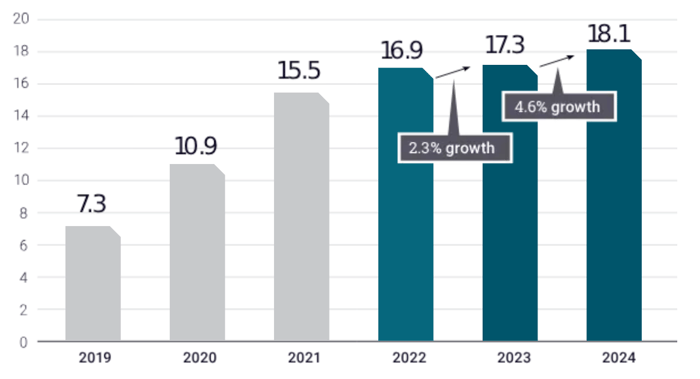
The MBO Partners 2024 State of Independence found that 18.1 million American workers currently describe themselves as digital nomads, an increase of 4.7% year over year and a growth of more than 147% since 2019.
This level of growth reflects a new normal of steady growth and a true entrance to the mainstream. Today, 11% of U.S. workers call themselves a digital nomad.
Number of American Digital Nomads
(in millions)

Traditional Workers Decline; Independent Nomads Continue to Grow
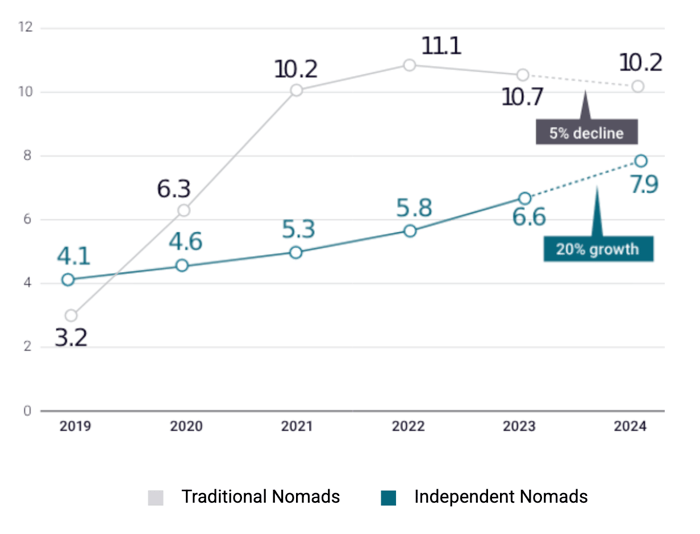
Since the start of 2020, the number of digital nomads with traditional jobs has more than tripled.
For the second year in a row, the number of American digital nomads with traditional jobs decreased, falling by 5% in 2024, largely due to return-to-office mandates. However, the number of digital nomads who are independent workers increased by 20% in 2024, substantially faster than the 14% increase in 2023.
But the thrill of nomading keeps many with traditional jobs on the road, at least part-time. Instead of globetrotting, these "tethered nomads" stay within reach of their offices so they can return as required.
Traditional vs. Independent Nomads
(in millions)

Digital Nomads Skew Young, Yet One in Seven Are 55 or Older
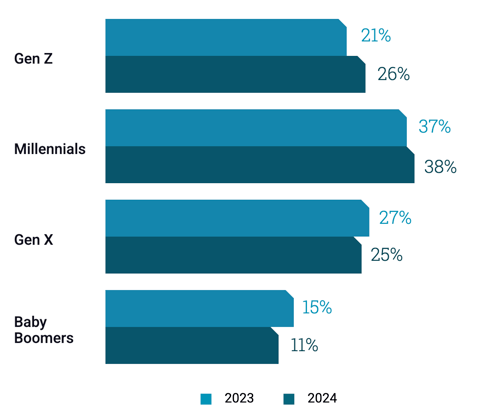
Younger generations, Gen Z (26%) and Millennials (38%), continue to comprise most digital nomads (64%). The rapid increase in Gen Z digital nomads (born 1997-2012) is the primary driver, as this generation now ages into the workforce, and are an active travel and large generation overall.
The share of older cohorts decreased in 2024. Still, almost one in seven (14%) of American digital nomads are 55 or older, indicating interest in the trend at all ends of the age spectrum.
Share of Digital Nomads
(by age cohort)

-
Digital Nomads are Highly Satisfied
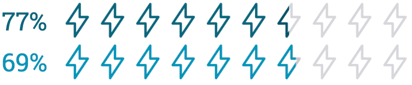
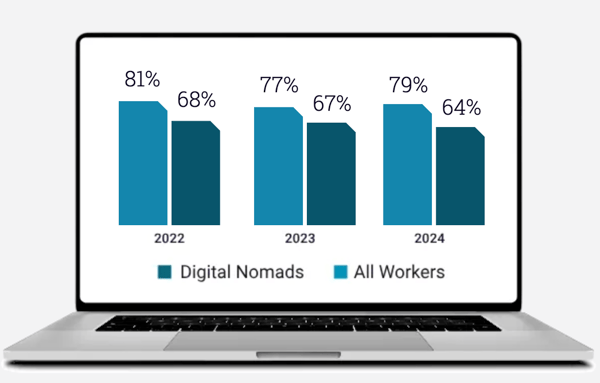
On average, digital nomads are more satisfied with their work than most other workers. In line with prior years, 79% of digital nomads reported being highly satisfied, and 12% reported being satisfied with their work. Few (4%) reported being dissatisfied.
Satisfaction is Higher Amongst Digital Nomads
-
Digital Nomads are Happy with Earnings
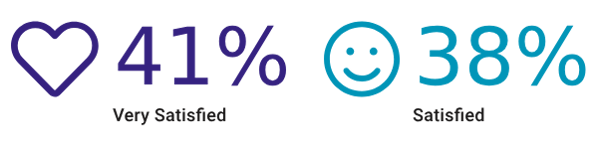
Regardless of how much money they make, most digital nomads are satisfied with their earnings. About four out of five (79%) report either being very satisfied (41%) or satisfied (38%) with their income, which is higher than the income satisfaction reported by other workers.
Digital Nomads Reporting Satisfaction
with their Annual Income
-
What Do Nomads Earn?
Because digital nomads are a mix of full-timers (64%) and part-timers (36%), and many only do it for part of a year, their income varies widely.
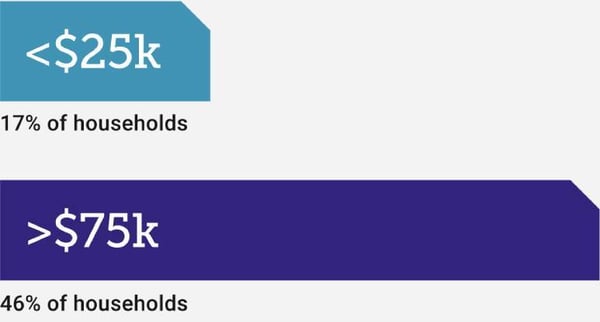
One in six digital nomads (17%) report that their household income is less than $25,000 annually. However, 46% say their household income is $75,000 or more. The number of high earners is due to many digital nomads working in fields where talent shortages are common, and their skills are in demand.Annual Income of Digital Nomads
-
Geo-Arbitrage Helps Keep Nomading Viable
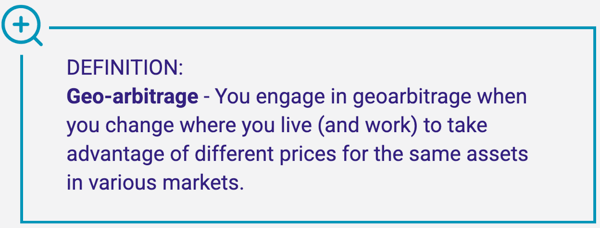
Many digital nomads work from places with relatively low living costs while having employers in higher-wage countries. Combining low-cost living with higher expat income, they can take advantage of income/living cost "geo-arbitrage." This enables lower-income digital nomads to fund their travels and spend less time working to support themselves and more time enjoying their adventures.
-
Choice and Freedom Drive Satisfaction
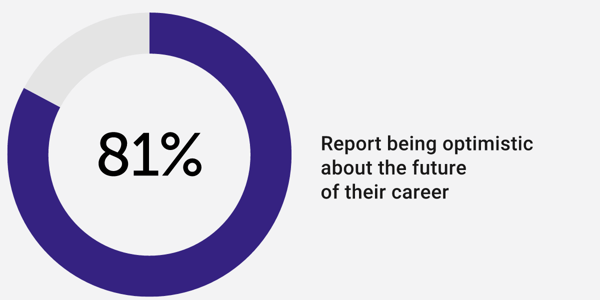
Nomads say the top benefit is traveling when and where they want. Both traditional jobholders and independent digital nomad workers report liking the work/life flexibility and autonomy of being a digital nomad. Digital nomads are also confident about the future. Eight in ten (81%) say they are optimistic about the future of their career.
Digital Nomads are Confident About the Future
-
Most Digital Nomads Plan to Continue, But Few Do It Forever
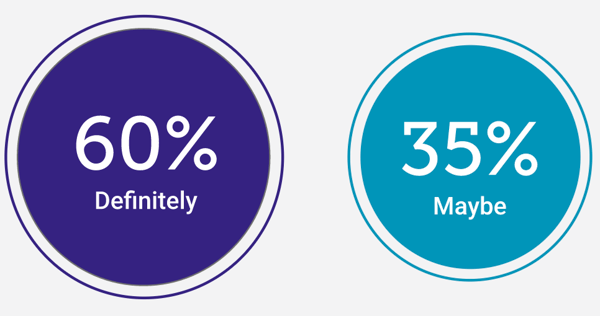
Almost all (95%) digital nomads say they definitely (60%) or maybe (35%) will continue to be digital nomads. One in five (21%) of former digital nomads report they will return to digital nomadism in the future, and 58% say they may.
Percentage Who Plan to Continue Working as Digital Nomads
More Domestic Travel, at a Slower Pace
Four in ten (40%) of digital nomads report they plan on spending more time in the U.S. next year and less time abroad, which may reflect work restrictions, the current global geopolitical and economic climate, or personal matters. Still, only 17% say they plan on spending more time abroad. In fact, 51% of digital nomads plan to travel exclusively in the U.S., like in 2023, but up from 42% in 2022. At the same time, 49% of nomads report planning on at least some international travel, but only 7% plan to spend the entire year outside the U.S.
In 2024, the average digital nomad visited 6.6 locations (versus 7.2 in 2023) and spent an average of 5.7 weeks at each location, up from 5.4 in 2023.
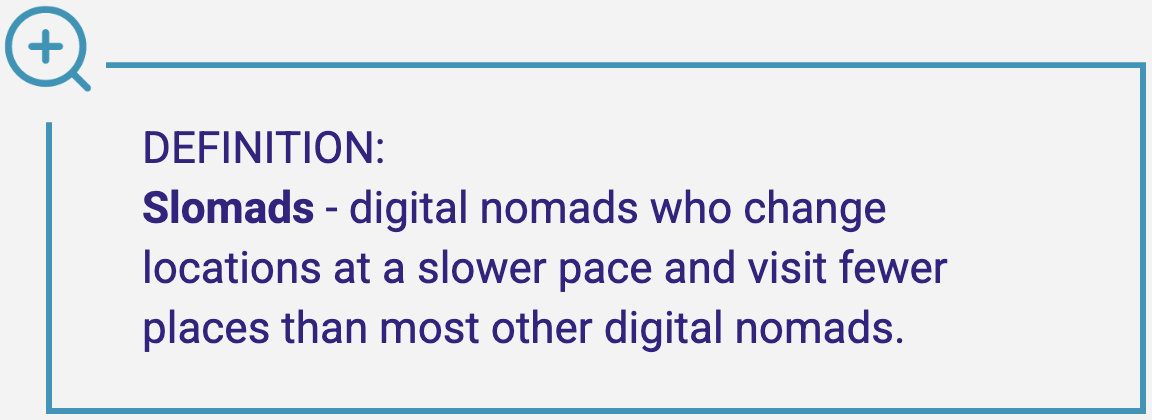
The study results also continue to show a shift in length of stay at each location. Digital nomads are visiting fewer locations but spend more time at each stop. Often called "slomading", this approach provides a more active social life, allows nomads to learn more about local cultures, reduces travel stress, and improves work productivity.

Well-Educated, Tech-Savvy, and In-Demand
Digital nomads work in a wide variety of fields, with the main professions including information technology (19%), creative services (14%); education and training (9%); sales, marketing, and PR (9%); finance and accounting (8%); and consulting, coaching, and research (7%).
Since most digital nomads rely on digital tools and the Internet in their work, it's not surprising that they report having strong technical and artificial intelligence (A.I.) skills.
Digital nomads also report high A.I. usage rates and skills compared to other workers. Eight in ten digital nomads (79%) report using A.I. in their work, and 76% say they're advanced (35%) or intermediate (51%) A.I. users. Six in ten (60%) workers who are not digital nomads report using A.I. in their work, with 24% saying they're advanced users and 45% intermediate users.
Use AI in Work
Advance/Intermediate AI Users*
*Asked to those using AI
Digital nomads are also, on average, well-educated, with 52% having a college degree or higher (versus 35% for adult Americans) and 18% reporting having an advanced degree (versus 13% for adult Americans).
Millions Aspire to be Digital Nomads
Each year, we ask adult Americans who aren't digital nomads if they plan on becoming digital nomads over the next two to three years. In 2024, 21 million said yes, and 45 million said maybe.
Despite their aspirations, our studies indicate that only 7% to 9% of those saying they will or may become digital nomads over the next 2-3 years do so.
The rest continue to be what we call "armchair digital nomads," those who follow the exploits of others instead of becoming digital nomads themselves. However, this data shows how extensive the interest is in this lifestyle. It also shows a ready pool of digital nomad aspirants to fuel the digital nomad trend into the future.
Digital Nomadism Has a Strong Foundation for Future Growth
When we started the MBO Partners' Digital Nomad study series six years ago, digital nomads were considered an eccentric and fringe group of nomadic workers. But digital nomadism is now mainstream, with 18.1 million Americans-a stunning 11% of American workers-being digital nomads.
The size and scale of this group have created a strong foundation for future growth:
-
More organizations are implementing digital nomad policies:
Successful corporations are embracing digital nomads and implementing policies that allow their workers to spend time working and traveling. As these workers generally have in-demand skill sets, it's a win for all.
-
Countries and cities are competing for digital nomads:
Governments at all levels realize that digital nomads spend more money than tourists, create jobs for locals- and even start local businesses. To date, more than 60 countries have created
-
special digital nomad visas and other programs, smoothing out red tape and making it easier for digital nomads to locate in their countries.
-
A growing support industry is making it easier to be a digital nomad:
A wide variety of organizations are now providing products and services to assist digital nomads, everything from cross-border health insurance and financial services to temporary work and living spaces, as well as job sites specifically for nomads. Digital nomad villages-organized communities that provide the work, social, and living infrastructure for remote workers and their families-are also springing up worldwide.
-
Remote work technology and methods continue to improve:
The pandemic-induced shift to remote work resulted in massive investments in remote work tools and technology. These include faster Internet speeds and greater bandwidth, remote collaboration and teaming software, and better tools for operating remotely. Organizations must also now productively utilize blended hybrid workforces, which greatly benefits nomads as well.
Looking Forward
After the explosive growth of American digital nomads between 2020 and 2022, we've seen modest growth in recent years. An expected slowdown is due to the pandemic easing, life and work returning to normal, and more workers are expected to show up at the office at least occasionally.
However, the factors driving the growth of digital nomadism are still in place. People want to travel, awareness and interest in digital nomadism is strong, and the shift to remote work will continue to be a powerful enabler. Because of these factors, we expect the number of digital nomads to continue to grow (albeit modestly) in the coming years.
Learn more about how Digital Nomads are
changing the workplace landscape.
Methodology
The findings in this research brief come from the 2024 MBO Partners State of Independence in America online panel survey, which was fielded in June of 2024. This is the 14th consecutive year this study has been conducted. For the 2024 study, Emergent Research and Rockbridge Associates surveyed 6,575 residents of the U.S. (aged 18 and older), including 1,178 current digital nomads. The survey results were weighted to reflect the demographics of the U.S.
About MBO Partners
MBO Partners is a global talent solutions platform designed to optimize the engagement between enterprise clients and high value independent workers. MBO’s comprehensive enterprise solutions allow clients to source exceptional talent, scale their independent workforce and optimize their workforce management practices. With vast experience and industry expertise, MBO helps you build a better, independent workforce for the future.